In most companies, the words team building still raise a mix of curiosity and skepticism. What does it really achieve? Is it useful, or just another box to tick on the annual agenda? In 2026, the conversation has shifted. Team building in Barcelona is no longer a superficial exercise — it is a deliberate investment in how people connect, communicate and work together in an era of hybrid work and dispersed teams.
Barcelona is one of those cities that naturally invites participation. Friendly, open, Mediterranean — it encourages people to relax, engage and be present. That’s why so many organisations look here when they want to do something more than a traditional corporate event. In this guide you’ll find evidence, logic and practical insight to help you choose experiences that create real impact, not just noise.
In 2026, team building in Barcelona isn’t an afterthought — it’s strategic
Not so long ago, many companies organised team building as a kind of break from the usual routine: go bowling, play a few games, have lunch. Then back to work. Today, the most effective programmes do something different: they create shared experiences that pull teams out of their everyday roles and put them in situations where they have to listen, coordinate, make decisions and reflect together.
This shift matters because work is different now. Teams are often hybrid, members may not see each other regularly, and the usual office dynamics have changed. Creating a space where people can be fully present, contribute and listen to each other again is valuable. It’s not just fun — it’s strategic.
Barcelona offers something few cities can match: an atmosphere that invites curiosity, an active gastronomic culture that brings people together naturally, and spaces that balance professionalism with warmth. All of this makes team building Barcelona an increasingly thoughtful choice for organisations serious about culture and cohesion.
What you’ll gain from this guide
In this article you’ll learn:
- Why team building Barcelona has evolved from simple activities to meaningful experiences
- Why culinary experiences are particularly effective
- How to choose the right format for your team
- A step-by-step approach to planning a powerful event
- How to measure impact beyond smiles and photos
If you’re in charge of people, culture or internal engagement, this guide will give you language, criteria and insight to make decisions with confidence.
How team building is changing in 2026?
Experiences over activities
Team building used to be synonymous with games. In 2026, right organisations understand that the real value lies in experiences — situations where people collaborate, produce something and reflect on the process together.
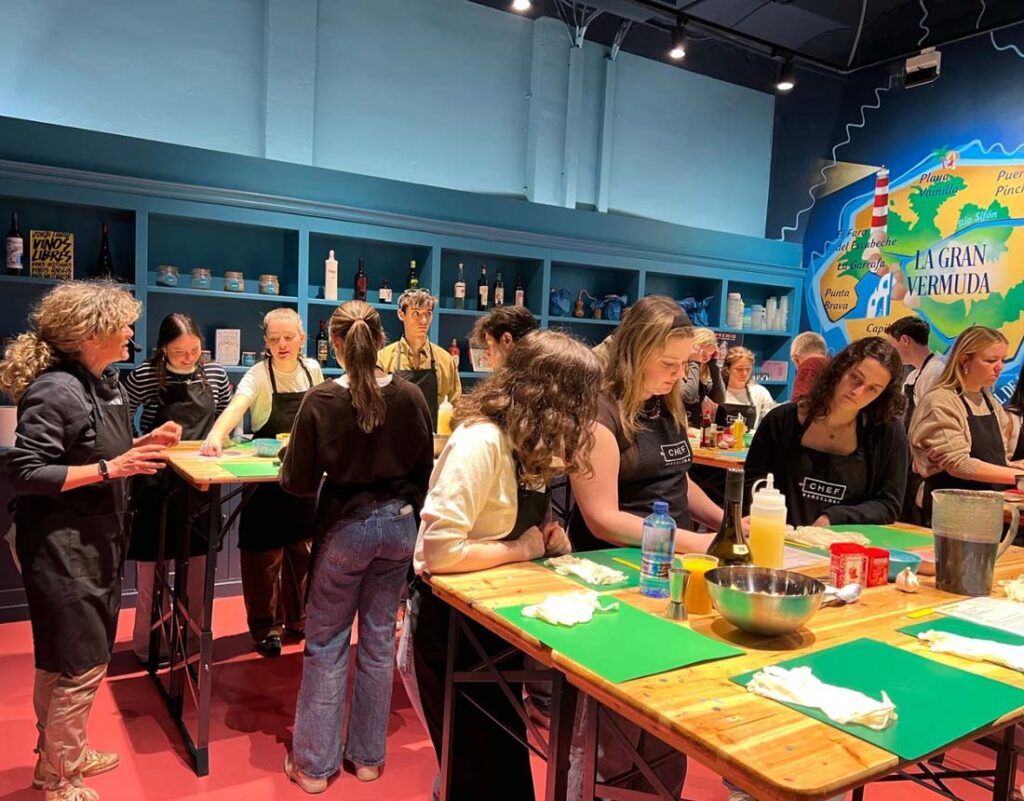
Cooking is a powerful example. When you share a kitchen, you share goals, time pressure and decisions. You talk, organise, ask for help. You taste the result together. These are real, human interactions. They are not random; they are connected to how teams work every day.
Spaces like WeChef Barcelona design these experiences deliberately. They set a real task — prepare a meal, coordinate as a team, create something that tastily reflects collective effort. It’s not a metaphor — it’s an activity that activates the same skills teams use in business contexts, but with an emotional and sensory layer that strengthens memory and connection.
Gastronomy as a connection tool
Let’s be clear: there’s a reason why food is at the centre of so many modern team building formats. Food is universal. It’s emotional. And cooking together creates more than output — it creates shared lived time.
Compare:
- Traditional formats: Activities that people complete and then forget
- Culinary experiences: Collaboration, responsibility and reflection wrapped in a shared outcome
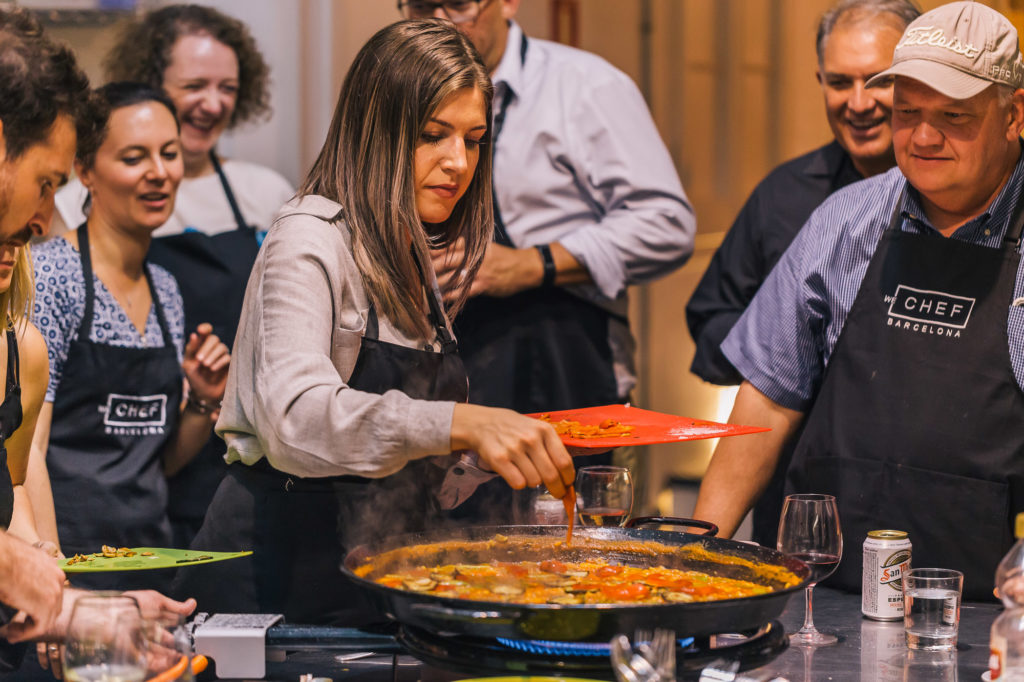
One standout format is the Paella Competition. It’s not just making paella. It’s dividing roles, planning steps, adapting to constraints, presenting a result. The paella becomes both process and symbol — proof of collective effort.
This kind of experience resonates with participants because it’s tangible, gripping and sociable. People laugh, negotiate, share tastes, and at the end they eat together — not out of obligation, but because they’ve earned it as a group.
Personalisation matters
In 2026, off-the-shelf team building is rarely enough. Organisations want programmes that reflect who they are and what they care about. That means understanding objectives, participants and context before choosing a format.
Good team building is not about entertainment for its own sake. It’s about:
- Aligning with company values
- Adapting to team size and diversity
- Generating outcomes that can be transferred back to work
This is why personalised experiences are becoming the norm. They shift team building from nice to have to meaningful and measurable.
How to choose the right team building Barcelona experience?
Define clear objectives first
If you start by asking “What activity should we do?”, you may end up with something fun but shallow. A better question is: “What experience will help our team communicate better, collaborate more fluidly and return to work with something real?”
Answers to this question help you narrow down options with intention. Do you want to reinforce cross-department collaboration? Encourage leadership? Rekindle energy after a period of remote work? Each objective suggests different approaches.
Match format to group dynamics
The size and composition of your team matter. Culinary formats tend to scale well because tasks can be structured into smaller groups while still contributing to a shared outcome. This mimics how teams are organised in real work contexts: roles are interdependent, success depends on coordination.
Formats available at team building activities are designed with this in mind, offering scalable models that keep engagement high regardless of group size.
Choose an environment that fosters presence
The setting itself influences how people behave. Barcelona’s spaces — whether contemporary, classic or industrial-chic — encourage teams to leave behind routine and focus on shared moments.
Gastronomic venues create an atmosphere that balances seriousness and informality. In other words, people can engage deeply without feeling like they are at a corporate event. This subtle shift often makes all the difference.
A practical roadmap for a successful team building event
Step one: Pre-event alignment
This phase is often overlooked, but it’s crucial. Before the event:
- Meet with organisational stakeholders
- Define outcomes and expectations
- Understand the team’s profile (roles, diversity, sensitivities)
This groundwork ensures that the experience is purposeful rather than accidental.
Step two: The event itself
In a well-designed culinary team building format:
- There’s a clear briefing that sets purpose
- Roles are naturally assigned (not arbitrarily imposed)
- Facilitators guide without dominating
This balance is important. People need structure — but they also need space to contribute, negotiate and learn from the interaction itself.
Step three: Reflection and takeaways
The most undervalued step in team building is reflection. At the end of the activity, take time to pause:
- What went well?
- What was challenging?
- What did we learn about how we communicate and collaborate?
This turns the experience into insight — and that’s where real impact lives.
What sets gastronomic team building apart?
Shared sensory memory
Our brains remember what we feel and experience with others. Cooking together triggers senses, emotion and attention. It’s not background activity. It’s lived time.
That makes it more memorable than many conventional formats, whose impact fades quickly.
Strengthening internal culture
Investing in thoughtful team building sends a message: people matter. Organisations that choose experiences with care communicate that they value connection, presence and shared effort. That’s not a small thing — it’s part of how cultures get built.
A common language for diverse teams
For international teams, food is a bridge. When people cook together, cultural differences become enrichment, not barriers. This fosters inclusion without needing translation or forced activities.
Many teams return from these experiences reporting increased mutual understanding and collaboration — not because the activity was fun, but because it was shared, practical and human.
Frequently asked questions about team building Barcelona
How long should a team building experience last?
Most impactful experiences run between two and four hours. This timeframe allows for immersion, connection and reflection without fatigue.
Is team building Barcelona suitable for international teams?
Yes. Barcelona attracts global teams precisely because its experiences are rooted in human interaction, not cliched formats. Culinary experiences, in particular, work well for multicultural groups.
What defines a premium team building experience?
A premium team building experience is not about luxury — it’s about quality: careful design, skilled facilitation, meaningful context and alignment with organisational values.
How can companies measure success?
Success isn’t measured in applause — it’s measured in change. Look for improved communication patterns, higher engagement scores and qualitative feedback that reflects behavioral shifts.
Team building Barcelona as a long-term investment
Team building in Barcelona in 2026 is not a one-off distraction. It’s part of how organizations think about culture, connection and performance. When experiences are chosen with care, they become lived stories inside the company—moments people refer to months later because they were real, memorable and human.
Barcelona’s creative energy, gastronomic richness and open-hearted spirit make it an ideal canvas for these experiences. The question now isn’t whether to do team building—it’s how to design it so that it actually matters.
If you are considering original team building activities in Barcelona that go beyond the superficial and connect people in a meaningful way, this is the moment to make thoughtful choices. Experiences that are well conceived, well facilitated and well remembered can strengthen the very way your teams work together — and that’s a return worth pursuing.