Have you ever thought about cooking with your coworkers?
It sounds a bit unusual at first. But paella team building has quickly become the go-to activity for companies looking for something different. And it really works.
The numbers speak for themselves: 87% of companies that organised culinary team-building activities in 2025 repeated the experience. Paella leads the trend—especially in Barcelona and Madrid. And that’s no coincidence. It combines tradition, teamwork, and fun in a way very few activities can.
More Than Cooking: A Transformational Experience
Paella team building goes far beyond following a recipe.
The result? Stronger teams, better communication, and a more relaxed work environment.
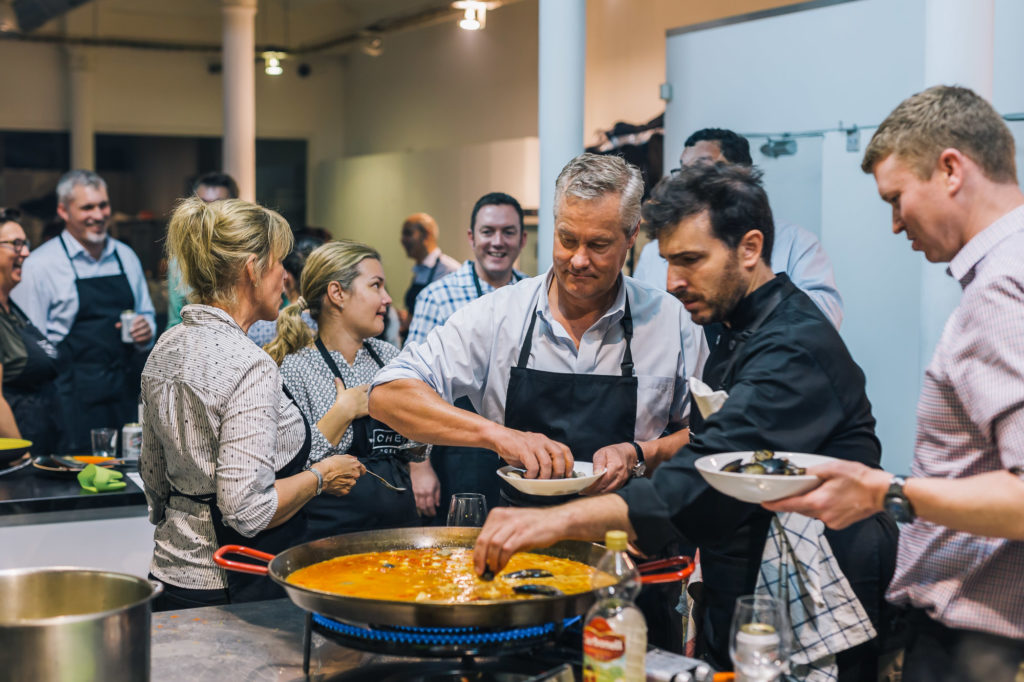
Each participant takes on a specific role. Some prepare the sofrito, others clean seafood, some manage the fire. But here’s the key: everyone depends on everyone else.
The CFO needs the intern to chop vegetables properly. The Head of Marketing must coordinate with IT to get the rice just right.
That interdependence creates something powerful.
Hierarchies fade. Unexpected leaders emerge. And yes—small conflicts arise (“Who added this much salt?”), but they’re resolved with humour and collaboration.
The real magic lies in the setting. Cooking feels personal, almost intimate. People relax without realising it. Stories come out while peeling prawns. Laughter happens when someone mixes up ingredients. It becomes nearly impossible to maintain professional masks in that environment.
Companies that invest in this format report immediate benefits:
- Improved cross-department communication
- Reduced workplace stress
- Increased motivation
Some studies even suggest productivity can rise by up to 23% after well-executed team-building activities.
That said—not all paella team-building experiences are equal. The difference lies in the details: skilled facilitators, quality ingredients, the right space, and thoughtful planning.
The Art of Cooking Together: A Methodology That Works
What makes a session truly successful? Structure.
A well-designed paella team-building session is the difference between a fun activity and a transformative experience.
It starts with team formation. Groups of 8–10 people work best, and departments are intentionally mixed—no clustering sales with sales.
Diversity fuels the process.
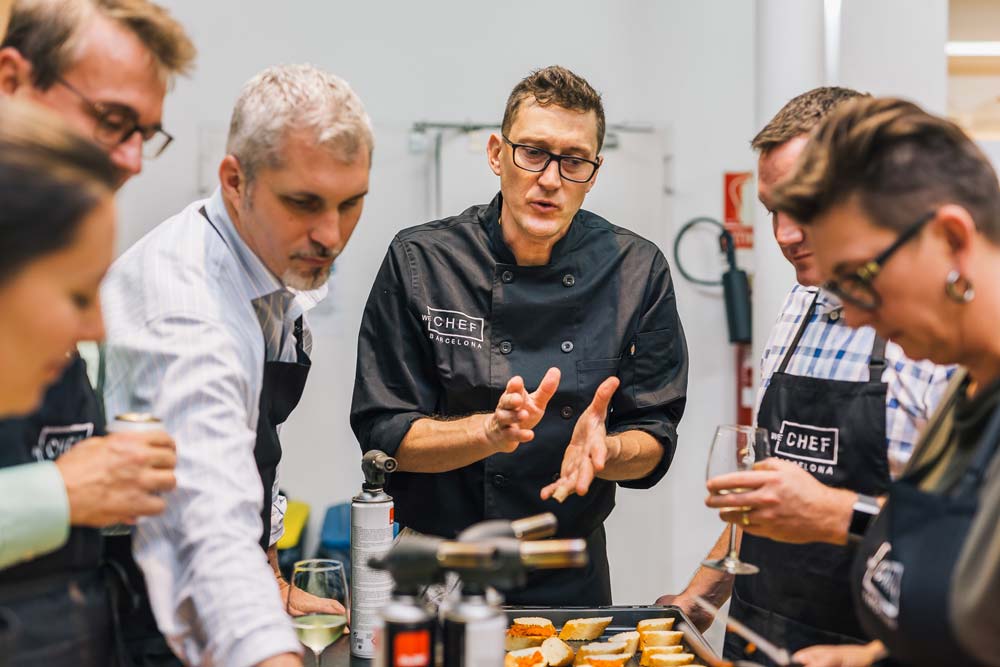
Next, a professional chef introduces the ingredients—their origins, characteristics, and importance. It’s not a lecture, but an interactive conversation:
“Has anyone cooked paella before?”
There’s always a story.
Then comes role distribution. And here’s the twist: roles aren’t assigned based on cooking experience. They rotate.
The person who never cooks handles the sofrito. The cooking enthusiast prepares ingredients.
Outside the comfort zone—that’s where the magic happens.
Timing matters too. Two and a half hours is ideal:
- 45 minutes: introduction and preparation
- 60 minutes: collaborative cooking
- 45 minutes: tasting and group reflection
Throughout the process, the chef moves between teams—not solving problems, but asking the right questions:
- “What do you think it’s missing?”
- “How could you organise yourselves better?”
Communication Happens Naturally
The background noise helps.
Sizzling pans. Overlapping conversations. Spontaneous laughter.
This relaxed atmosphere encourages conversations that would never happen in a meeting room.
People talk about hobbies, family, past cooking experiences. They reveal personal sides that humanise workplace relationships.
And that impact goes far beyond the activity itself.
Barcelona: The Hub of Corporate Paella Experiences
Barcelona has become the national benchmark for paella team-building events.
Over 150 companies hosted these experiences in the city in 2025, and the numbers keep growing.
Why Barcelona?
It’s the perfect mix:
- Culinary tradition
- Versatile venues
- Highly specialised professionals
From industrial kitchens to seaside terraces, each setting adds its own flavour. Tech companies often choose modern, minimalist spaces, while consulting firms lean towards more traditional environments.
But Barcelona offers something else: Mediterranean authenticity.
Fresh ingredients arrive daily from local markets. Chefs know their suppliers personally. That connection to the product enhances the experience.
Companies like WeChef Barcelona have taken this to the next level. Their paella competition for companies blends friendly competition with collaborative learning.
Teams cook different styles—Valencian, seafood, vegetarian—and then evaluate results together.
Logistics also play a key role. The city has a strong ecosystem of corporate event providers:
- Mobile kitchen setups
- Ingredient sourcing
- Catering support
Everything is designed so companies can focus on the experience—not the organisation.
Healthy Competition: When Cooking Becomes a Game
What happens when you add a competitive twist?
You get one of the most effective formats: paella competitions for companies.
The concept is simple:
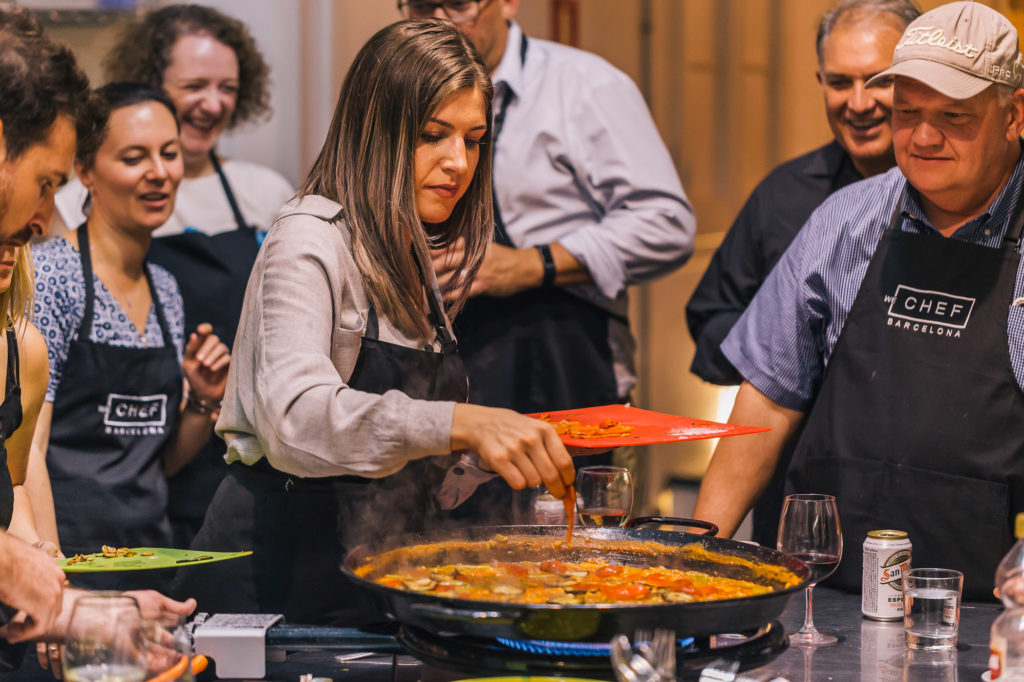
Multiple teams cook simultaneously, each creating their own version of paella.
At the end, a blind tasting determines winners in categories such as:
- Best presentation
- Most authentic flavour
- Most creative recipe
But here’s the key: competition should never create stress. It’s about stimulating creativity and collaboration—not workplace tension.
Each team starts with the same base ingredients but can choose additional elements—artichokes, red peppers, green beans, even snails.
Decisions are made collectively, encouraging group consensus.
During cooking, teams observe each other, exchange tips, joke around:
“Hey, your sofrito’s burning!”
“How much rice did you use?”
This dynamic fuels communication.
The tasting moment is special. Everyone tries every paella, shares feedback, recognises others’ achievements. Professional chefs add constructive insights.
And finally—symbolic awards:
- Personalised certificates
- Branded aprons
- Group photos
Tangible memories that extend the impact beyond the event.
Why This Works: The Real Ingredients of Success
Let’s be honest—many corporate events miss the mark.
Forced dynamics. Forgettable talks. Awkward icebreakers.
Paella team building breaks that pattern.
Why?
1. It’s universal
Everyone eats. Everyone has food memories. No cultural or generational barriers.
2. It’s tangible
The rice is either perfect or overcooked. The sofrito is golden—or burnt. Immediate feedback creates real satisfaction.
3. It develops real skills
- Fire control requires focus
- Ingredient ratios involve basic maths
- Timing demands coordination
All in a relaxed setting.
4. It creates surprise
The quiet colleague becomes a leader. The boss turns out to be a great cook.
These moments reshape perceptions.
5. It ends with a shared reward
You eat what you’ve created—together.
Anthropology backs this up: sharing food strengthens human bonds.
The Future of Corporate Events: Authentic Experiences
Companies are moving away from artificial formats.
They want authenticity. Real connection.
Paella team building fits perfectly into this shift.
Millennials and Gen Z prefer learning by doing over passive listening. This format delivers exactly that.
And it’s not just a trend. It’s grounded in proven principles:
- Experiential learning
- Collaborative work
- Practical problem-solving
The concept is expanding into other culinary experiences—bread making, cheese workshops, themed dinners.
But paella remains unique thanks to its technical complexity and cultural depth.
Even international companies are adopting the model—adapting it locally:
- Risotto in Italy
- Paella in France
- Rice-based dishes across Latin America
The Perfect Recipe for Modern Team Building
After analysing countless corporate events, one thing is clear:
Paella team building isn’t just another activity.
It’s a transformational tool.
It works because it combines:
- Tradition
- Collaboration
- Healthy competition
- Immediate reward
But also something deeper:
- Human connection
- Breakdown of hierarchies
- Discovery of hidden talents
The data supports it:
- 92% of companies report improved workplace climate
- 78% see better interdepartmental communication
- 85% repeat the experience the following year
So if you’re considering it for your company, the ROI goes beyond metrics.
It’s about rediscovering your colleagues as people—not just job titles.
Paella team building is here to stay. Not as a passing trend, but as a natural evolution toward more human, authentic, and effective corporate experiences.
Ready to cook up a stronger team?