There’s a very particular moment in every good group cooking session — when someone tastes a dish, looks up, smiles, and says, “Ah, that’s it.” It almost doesn’t matter who said it. What matters is how everyone else feels it. That tiny shift from “okay” to “right” is what makes a team cooking experience truly memorable.
For many companies, corporate events can feel like obligations: tick a box, entertain for an hour, take a photo. But in Barcelona — a city where food is not merely sustenance but culture, identity, and connection — cooking together can be something much deeper. It becomes a space where people meet as people, not just colleagues. Where conversations happen beside chopping stations, not PowerPoint screens. And where the team is built from real interaction, not artificial icebreakers.
A corporate cooking event Spain, thoughtfully designed, has the power to transform team dynamics in ways that standard corporate formats rarely achieve.
A shared kitchen moment becomes a shared story
This isn’t a surface-level description of an activity. In the following sections, you’ll discover:
- Why a team cooking experience works so effectively for corporate cohesion?
- How cooking team building Barcelona sessions strengthen communication and leadership?
- What makes a cooking format different from a typical workshop?
- Practical insights for designing a meaningful corporate cooking event
- Why choosing a premium culinary space matters?
Let’s go deeper than “fun” and look at what really happens when people cook together.
Why cooking together works better than most corporate formats?
Collaboration under pressure — for real
In the office, collaboration often happens through schedules and agendas, in the kitchen, collaboration happens in real time.
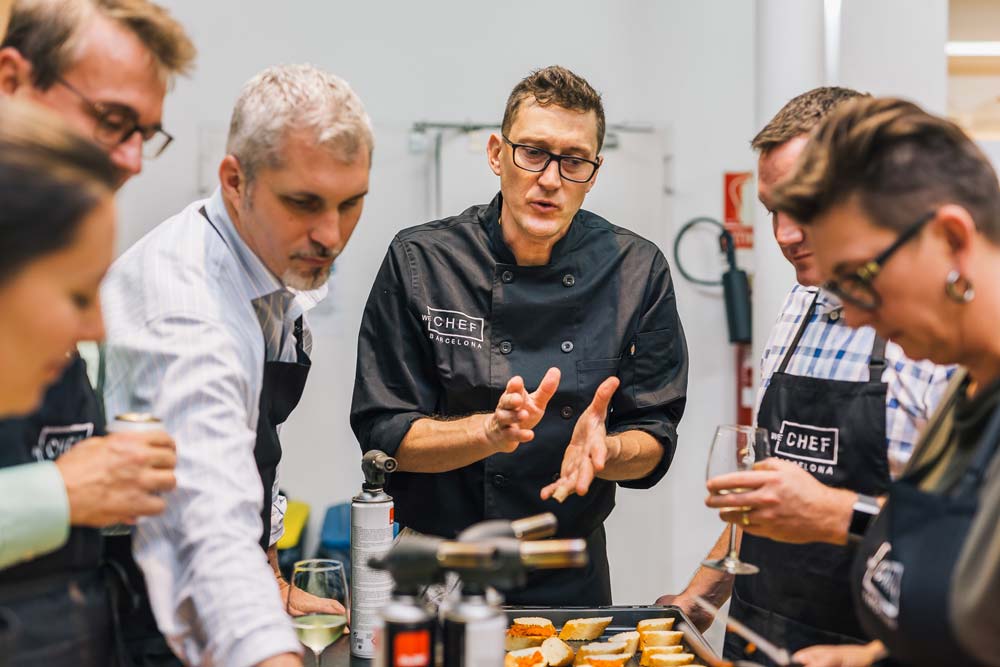
In a team cooking experience, there’s no buffer. Ingredients don’t wait. Timers don’t pause. Decisions affect the dish immediately. Someone checks the heat, someone organizes timing, someone adjusts seasoning.
No hierarchy. Just action.
One group we worked with recently — a diverse international team — surprised their own leadership. In a tapas-focused cooking challenge, quieter team members naturally assumed coordination roles. Back at the office, managers reflected that they had discovered new strengths they hadn’t noticed before.
That’s the power of cooking: it reveals how people actually work together.
Communication you can taste
Cooking doesn’t tolerate vague messages. “A bit more salt” becomes “add this amount now.” “Manage the fire” becomes “medium heat for four minutes.” Language becomes precise because the task demands it — and the team rises to it.
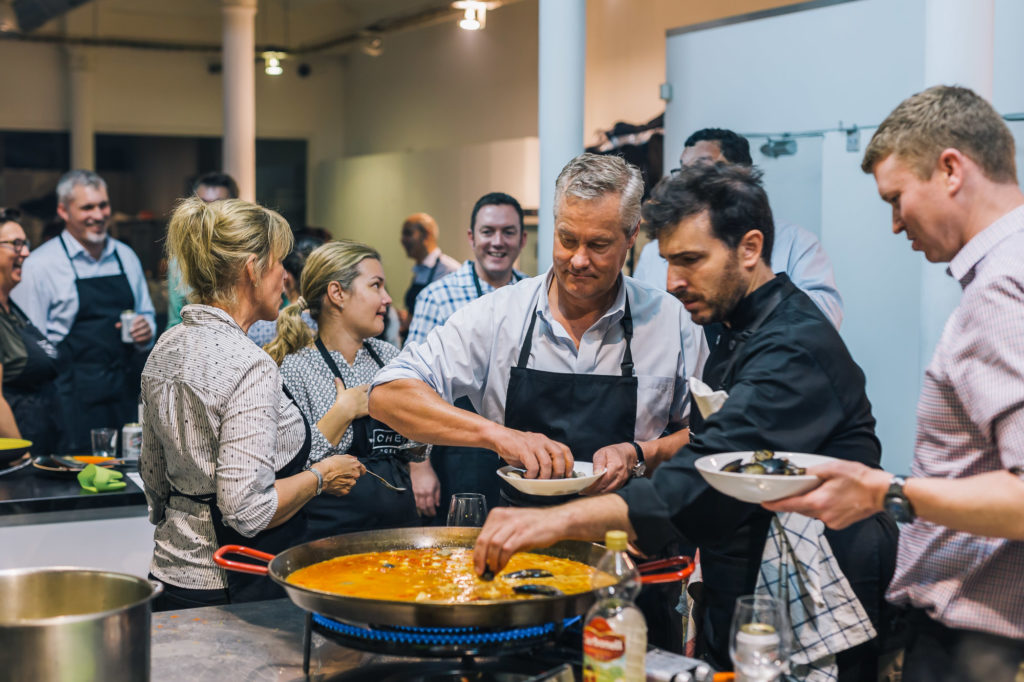
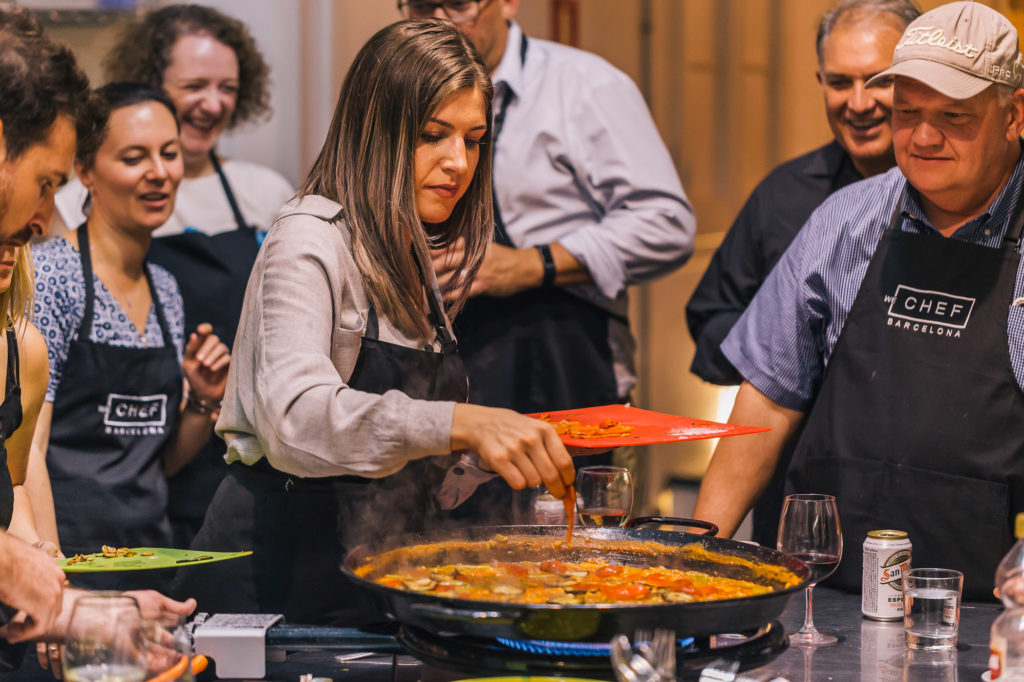
In formats like the paella and tapas activity, teams must synchronize decisions: timing, heat, sequence, presentation. It’s active listening, not passive participation. Coaching isn’t about theory; it’s about practice.
Shared outcome, shared pride
At the end of the session, everyone sits at the same table. Not a metaphorical one — a real one. They eat together what they cooked together. That’s important.
When people talk about the dish, they talk about who did what. They laugh about the moment someone thought the paprika was an “optional spice.” They reflect on how they managed to get the timing right. Those small shared reflections are far more impactful than any generic presentation.
What makes a cooking team building Barcelona experience special?
It’s social, not just structured
A cooking floor hums differently from a conference room. There’s rhythm, movement, smells, spontaneous conversations. The structure is there — clear objectives, professional facilitation, thoughtful pacing — but the vibe stays human.
There’s something about sharing a chopping board with someone that dissolves the pretense that often exists in professional settings.
Competition that builds unity
When done well, a bit of friendly competition can boost engagement — not stress it. In a paella competition ortapas competition, teams aim for excellence — deliciousness, creativity, presentation — but also balance, resource use and cooperation.
These are not random games. They are challenges rooted in real cooking logic that bring out real skills: planning, flexibility, compromise, and pride in doing something well.
A premium space with genuine hospitality
Not all kitchens are made equal — and corporate events shouldn’t settle for amateur setups. A space like WeChef Barcelona is designed for these experiences: professional stations, intuitive flow, thoughtful layout and an atmosphere that feels purposeful without being intimidating.
That matters. The right setting subtly communicates respect for participants, for the company’s intention, and for the experience itself.
In short, environment shapes perception — and perception shapes memory.
How to design a corporate cooking event Spain that delivers
Start with “why”
Before choosing recipes or formats, ask:
- What do we want to achieve with this experience?
- Are we fostering connection?
- Encouraging leadership?
- Breaking silos?
- Celebrating a milestone?
The clearer the intention, the more meaningful the outcome.
A team cooking experience without intention is just a cooking class. With intention, it becomes a transformative moment.
Choose the right format for your team
Different groups thrive in different dynamics:
Collaborative kitchen
Best for teams that benefit from conversation, shared pacing and mutual support. The focus is on joint creation, shared responsibility and collective reflection.
Structured challenge
Great for teams that enjoy direction and mild competitive energy. Formats like the paella competition or tapas competition introduce clear goals, points of comparison and opportunities to celebrate shared achievement.
These formats provide variety while keeping focus on connection and teamwork.
Facilitation makes the difference
Professional chefs bring culinary skill — facilitators bring group dynamics insight. In a corporate cooking experience, both are essential.
Facilitators observe, guide and notice patterns others miss. They help quieter participants contribute and ensure that the activity flows in a way that stays engaging, not chaotic.
This is where a premium event shifts from “fun” to “meaningful.”
Real benefits teams feel long after the session
Teams don’t just walk away full — they walk away changed in subtle ways:
• Better communication habits
• Recognition of hidden strengths
• More relaxed cross-department connection
• A sense of shared accomplishment
• Stories they bring back to the everyday workplace
These aren’t buzzwords. They are consistent reflections from teams who have lived this experience.
Frequently asked questions about team cooking experiences
Is this suitable for any corporate group?
Yes. Whether a small leadership team or a larger multi-department group, formats scale and adapt so everyone participates actively.
Do participants need cooking experience?
Not at all. Activities are designed for all levels. Curiosity and willingness to engage matter far more than prior skill.
Can the experience work for international teams?
Absolutely. Food is universal. Mediterranean cooking is accessible and engaging for diverse cultural backgrounds.
What measurable impact can companies expect?
Many organizations report stronger team cohesion, improved communication and increased post-event engagement scores.
How does this compare to traditional workshops?
Cooking is a doing experience. Collaboration happens through action — not slides or theory — and the results are tangible in both process and shared meal.
Cooking together becomes working together
A team cooking experience in Barcelona is not about filling time with an activity. It’s about creating a moment where people meet outside of job titles, connect through shared goals and reveal their working styles in real situations.
Here, food becomes the bridge, and the kitchen becomes the place where teams learn about themselves — about collaboration, timing, communication, leadership and joy in collective creation.
At the end of the day, when the plates are served and the laughter remains, what stays with participants is not just what they cooked — but how they cooked it, who they became in the process and how they felt doing it together.
That is the quiet power of a corporate cooking event Spain done with intention, presence and heart.