Do you know what your students will remember most about their trip to Barcelona?
Not another museum.
Not another guided tour.
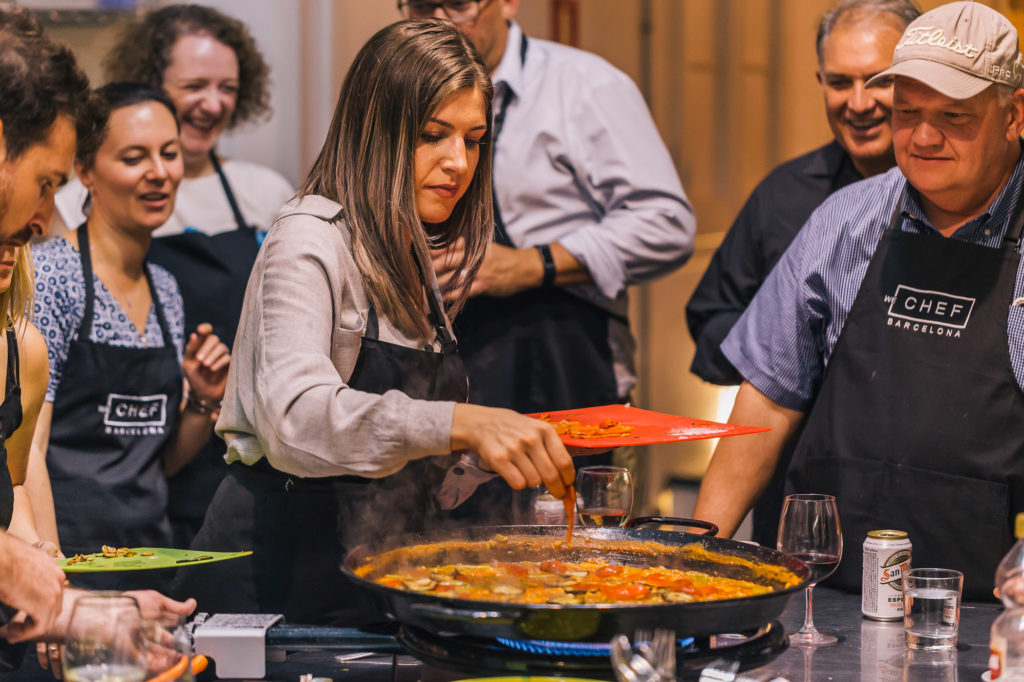
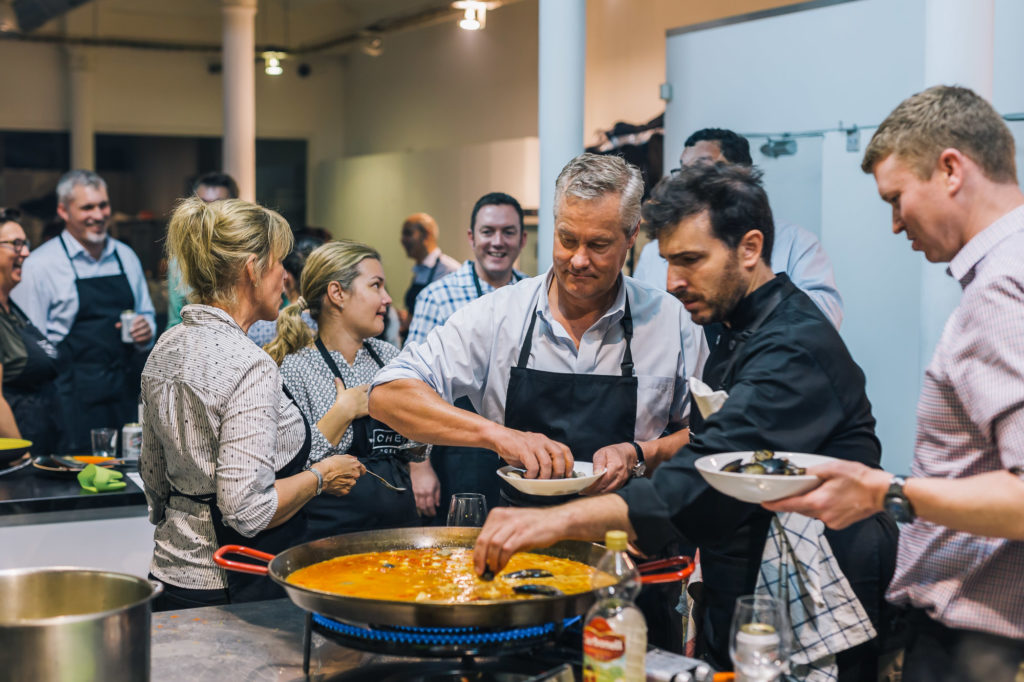
It’ll be that afternoon when they learned how to cook authentic paella while laughing uncontrollably with their classmates.
Student cooking workshops have become one of the fastest-growing educational experiences in Spain — and for good reason. While students learn how to prepare tapas and traditional Mediterranean dishes, they’re also developing skills that no textbook can truly teach.
When Cooking Becomes Learning: The Educational Revolution Nobody Saw Coming?
For decades, school trips followed the exact same formula:
Bus ride.
Museum.
Packed lunch.
Back home.
Predictable. Forgettable.
Culinary workshops completely changed that model.
Have you ever noticed what happens when you hand a shy teenager an apron and teach them how to make gazpacho?
Suddenly, the quiet student who barely speaks in class becomes the natural leader of the group.
That transformation is real.
Recent studies from Spain’s education sector show that 89% of schools incorporating culinary experiences into educational travel programs report significantly higher student engagement levels.
And the benefits go far beyond cooking itself.
These workshops strengthen:
- Teamwork
- Communication
- Problem-solving
- Creativity
- Emotional intelligence
- Self-confidence
Why Barcelona Leads the Trend?
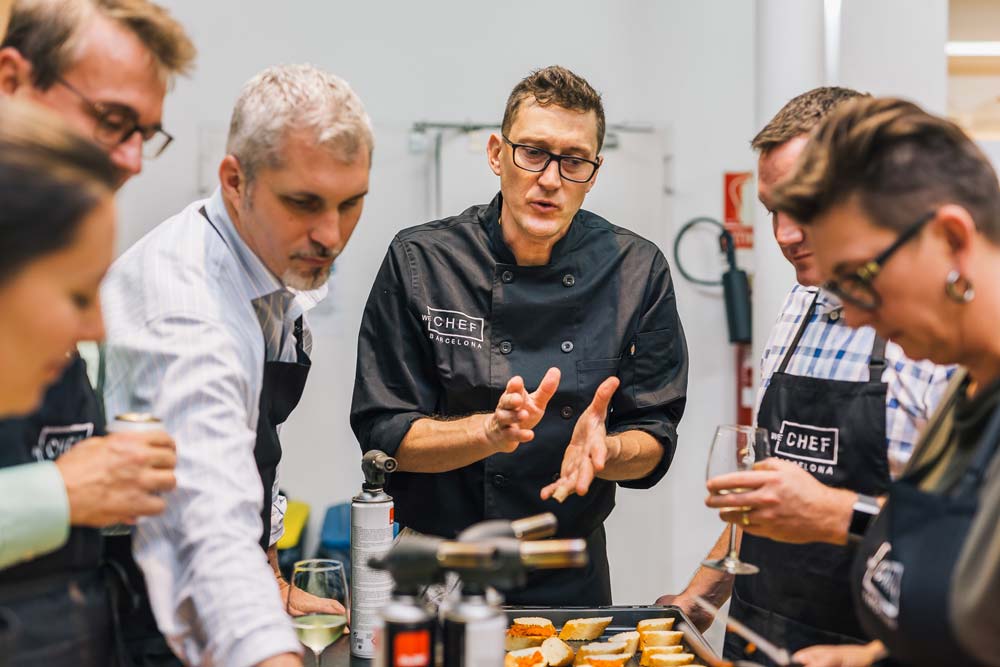
In Barcelona, specialized culinary centers like WeChef have developed methodologies specifically designed for student groups.
This isn’t about copying recipes from YouTube.
These are structured educational programs where every activity serves a clear learning objective.
The Secret Is in the Structure
Students work in small groups, usually between four and six participants.
Each person takes on a specific role:
- Ingredient management
- Timing coordination
- Plating and presentation
- Team communication
The result?
A miniature culinary company functioning in real time.
And honestly, teachers love it.
Because during these workshops, they discover sides of their students they rarely see inside traditional classrooms.
They identify:
- Natural leaders
- Hidden talents
- Communication patterns
- Group dynamics
Insights that often improve classroom interaction long after the trip ends.
Modern Schools Are Changing Their Perspective
The most innovative schools no longer treat cooking workshops as simple entertainment.
They see them as serious educational tools.
Because what better way to teach math than calculating ingredient ratios?
Or history through traditional Catalan cuisine?
Or leadership through collaborative problem-solving under pressure?
Learning becomes tangible.
And students actually enjoy it.
Why Cooking Breaks Social Barriers Faster Than Almost Anything Else?
Here’s something fascinating:
Cooking has a unique social superpower.
It instantly removes hierarchy.
Have you ever watched students from completely different social circles working together to make Spanish tortilla?
It’s incredible.
Suddenly:
- Nobody cares who wears designer sneakers
- Nobody cares who gets the highest grades
- Nobody cares who’s “popular”
The only thing that matters is not burning the tortilla.
Everyone Starts at the Same Level
That’s what makes student cooking workshops so powerful.
Nobody is born knowing how to make proper romesco sauce.
This shared beginner status creates genuine collaboration in a way very few educational activities achieve.
And students constantly surprise each other.
The “problematic” student may turn out to have exceptional knife skills.
The quietest participant might have the most refined palate in the room.
The Numbers Back It Up
A 2025 University of Barcelona study involving more than 800 secondary school students found that:
- 76% significantly improved interpersonal communication skills
- 68% felt more socially integrated into their class groups afterward
That’s not marketing language.
That’s measurable social impact.
Collaborative Cooking Changes Group Dynamics
Specialized workshops use techniques specifically designed to maximize participation.
For example:
- Rotating team leadership
- Blind tasting exercises
- Shared preparation stages
- Collaborative plating challenges
No one can fully disengage without affecting the entire group.
And unlike traditional classroom activities, participation feels natural rather than forced.
The Impact Lasts Beyond the Workshop
Teachers consistently report that the social connections built in cooking workshops continue weeks later back in school.
Friend groups shift.
Classroom cohesion improves.
Exclusion decreases.
The kitchen becomes a social equalizer.
Why Barcelona Has Become Europe’s Capital for Student Culinary Experiences?
What makes Barcelona so perfect for educational cooking workshops?
The answer goes deeper than tourism.
A Living Culinary Classroom
Barcelona offers extraordinary gastronomic diversity within a compact space.
Students can experience:
- Traditional Catalan cuisine
- Mediterranean food culture
- Modern gastronomy
- Historic food markets
- Contemporary culinary innovation
all within a few kilometers.
The city itself becomes part of the lesson.
The Professionals Make the Difference
Barcelona has spent decades attracting:
- Chefs
- Culinary educators
- Nutrition experts
- Gastronomy specialists
Many professionals working in student workshops today have both culinary and pedagogical training.
That combination matters enormously when working with teenagers.
Spaces Designed Specifically for Student Groups
Centers like WeChef have spent years refining facilities tailored for educational travel.
Their kitchens are designed for:
- Large groups
- Constant supervision
- Hands-on learning
- Safe movement
- Collaborative interaction
Every detail is intentional.
Endless Variety of Experiences
Barcelona offers workshops ranging from:
- Traditional tapas
- Authentic paella
- Catalan cuisine
- Mediterranean fusion
- Molecular gastronomy
- Sustainable cooking
Each program can be adapted to:
- Student age
- Academic goals
- Group size
- Educational focus
Barcelona Breathes Food Culture
Students don’t just cook in Barcelona.
They absorb an entire culinary philosophy.
They visit markets like La Boqueria.
Discover local ingredients.
Learn why meals matter socially in Mediterranean culture.
It’s immersive learning at its best.
Infrastructure Matters Too
Barcelona is extremely well-prepared for educational tourism.
The city offers:
- Efficient public transport
- Student-friendly accommodations
- Experienced event providers
- Strong institutional support
That logistical reliability makes organizing much easier for teachers and coordinators.
And the numbers confirm the trend:
Over 70% of student groups visiting Barcelona now include some form of culinary activity in their programs.
That percentage keeps growing every year.
The Hidden Skills Students Develop Without Realizing It
One of the most fascinating things about cooking workshops is this:
Students think they’re simply learning recipes.
But they’re actually building life skills that will shape their future careers.
Leadership Becomes Situational
In a kitchen, leadership constantly shifts.
The student best at organizing ingredients may not be the best at timing dishes.
Participants learn:
- When to lead
- When to step back
- When to support others
That’s emotional intelligence in action.
Time Management Becomes Real
Deadlines suddenly have immediate consequences.
If the sofrito isn’t ready on time, the paella fails.
Unlike abstract classroom theory, time management in the kitchen feels tangible and urgent.
Creativity Within Constraints
Great workshops provide structure while encouraging improvisation.
Students receive:
- Specific ingredients
- Limited time
- Basic techniques
Then they’re challenged to innovate.
That’s exactly the kind of creativity modern workplaces demand.
Communication Improves Naturally
Cooking requires constant information exchange:
- “How hot is the oven?”
- “Has anyone checked the seasoning?”
- “How much time is left?”
Students practice effective communication without even noticing.
Failure Becomes Productive
And things will go wrong.
Sauces split.
Cakes collapse.
Rice overcooks.
The best workshops transform these moments into learning opportunities.
Students develop:
- Adaptability
- Resilience
- Problem-solving skills
- Calm under pressure
Sustainability Enters the Conversation
Modern cooking workshops increasingly include discussions around:
- Food waste
- Seasonal ingredients
- Local sourcing
- Environmental impact
And because students experience these ideas firsthand, the lessons stick far better than textbook theory ever could.
Turning the Kitchen Into a STEM Learning Lab
This is where things become truly exciting.
Some of Barcelona’s most advanced student cooking programs have figured out how to make science, math, and physics genuinely engaging.
Suddenly, Math Makes Sense
Scaling a bread recipe from four people to twenty instantly turns fractions and ratios into practical tools rather than abstract equations.
Students immediately understand why precision matters.
Chemistry Comes Alive
Cooking is full of visible chemical reactions:
- Caramelization
- Emulsification
- Fermentation
- Protein coagulation
Students can literally:
- See
- Smell
- Taste
- Touch
scientific concepts happening in real time.
Molecular Gastronomy for Teenagers
Some advanced programs now include “gastroscience” workshops specifically designed for high school students.
Participants explore:
- Spherification
- Gelification
- Acid-base reactions
- Food chemistry
while preparing modern culinary creations.
Physics Through Cooking
Heat transfer.
Density.
Phase changes.
Concepts become dramatically easier to understand when students experience them hands-on through pastry, chocolate tempering, or baking techniques.
Biology Suddenly Feels Relevant
Workshops involving yogurt, bread, or cheese naturally introduce microbiology and fermentation.
Students witness living bacterial cultures transforming food right in front of them.
Schools Are Integrating Workshops Into STEM Education
Forward-thinking educators now align culinary workshops with classroom curriculum topics.
The result?
Complex scientific concepts that previously required weeks of explanation suddenly become intuitive after one practical cooking session.
Academic Results Are Impressive
Schools regularly integrating gastronomy into STEM education report:
- Higher concept retention
- Greater student engagement
- More positive attitudes toward science
In some cases, scientific retention improved by over 30%.
The Final Meal: When Everything Suddenly Makes Sense?
And then comes the most important moment of all:
The shared meal.
There’s something incredibly powerful about students sitting down to eat food they created together.
The satisfaction is immediate and real.
Not a grade arriving next week.
Not delayed feedback.
A physical result they can see, smell, and taste.
The Real Learning Happens Around the Table
This is when students:
- Share stories
- Laugh about mistakes
- Explain techniques
- Celebrate successes
It becomes pure peer-to-peer learning.
Teachers often witness social dynamics they never see in school:
- Quiet students becoming confident storytellers
- Unlikely friendships forming
- Groups mixing naturally
The meal becomes a social catalyst.
Reflection Happens Naturally
Students don’t just discuss flavors.
They reflect on:
- What worked
- What failed
- What they’d change next time
- How the team collaborated
It’s spontaneous metacognition.
Modern Workshops Encourage Creative Documentation
The best programs include reflection through:
- Photos
- Videos
- Group storytelling
- Collaborative blogs
Not boring academic reports.
Authentic content created by students themselves.
Students Experience Shared Responsibility
Every participant contributes something meaningful to the final meal.
And they feel the reward immediately.
Without realizing it, students learn what collaboration actually means.
The Cultural Connection Matters Deeply
When students taste their own version of a traditional Catalan recipe, they connect directly with centuries of local culinary heritage.
Food stops being theory.
It becomes lived culture.
This Is What Makes the Experience Unforgettable
The best student cooking workshops don’t just create educational value.
They create memories.
Powerful memories students will still talk about years later.
And honestly?
That may be the most valuable lesson of all.
Ready to transform your next educational trip into an experience your students will remember for life?
Student cooking workshops in Barcelona are no longer a niche activity.
They’ve become one of the most powerful educational tools available today.
And your students deserve that kind of experience.