Have you been tasked with organizing a student group activity in Barcelona and suddenly realized you have no idea where to begin?
Don’t worry — that mix of excitement and mild panic is completely normal.
Planning something memorable for a group of demanding students in a city overflowing with possibilities isn’t easy. Barcelona isn’t just a beautiful Mediterranean postcard. It’s one of Europe’s most dynamic destinations for educational travel, cultural immersion, and experiential learning.
But here’s the catch:
Choose the wrong activity, and your event could become unforgettable for all the wrong reasons.
The good news? Barcelona offers the perfect environment for student-focused experiences that combine culture, collaboration, creativity, and genuine connection.
And few activities achieve that better than food-based experiences.
Cooking Workshops: Where Food Breaks the Ice Naturally?
I’ve seen shy groups of students transform into confident, collaborative teams after a single cooking workshop.
Why?
Because food brings people together. Simple as that.
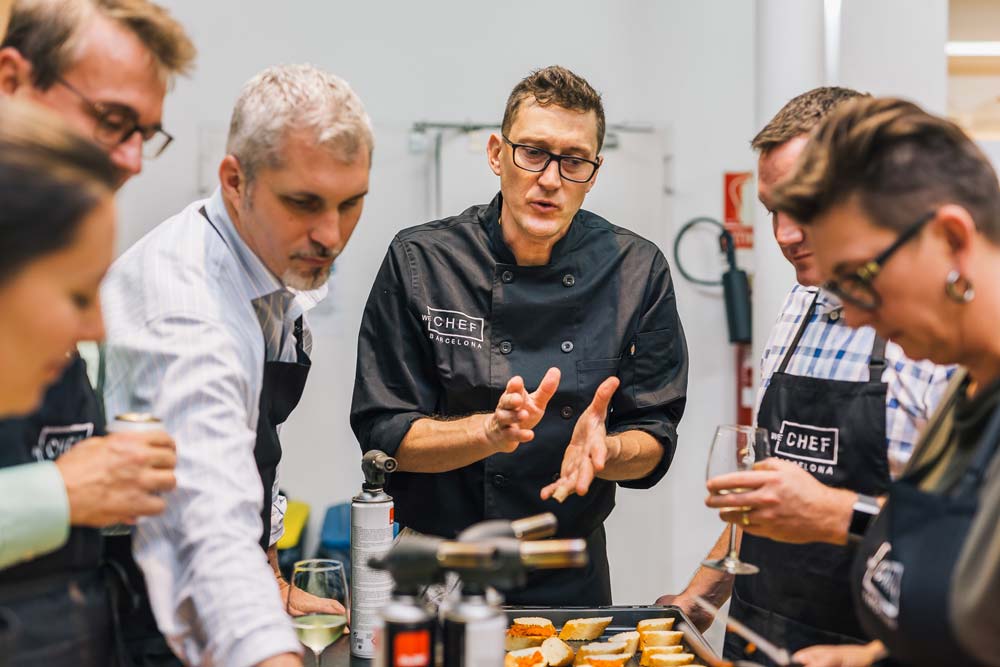
Today’s cooking workshops for students in Barcelona go far beyond basic recipe classes. These are immersive experiences where participants discover Catalan gastronomy while unintentionally developing communication, leadership, and teamwork skills along the way.
And the transformation happens naturally.
One student instinctively takes charge of timing.
Another becomes the sauce expert.
Someone else suddenly shines as the creative problem-solver.
Cooking removes the artificial structure of the classroom. Students interact organically, without academic pressure or predefined hierarchies.
Why Paella Workshops Work So Well?
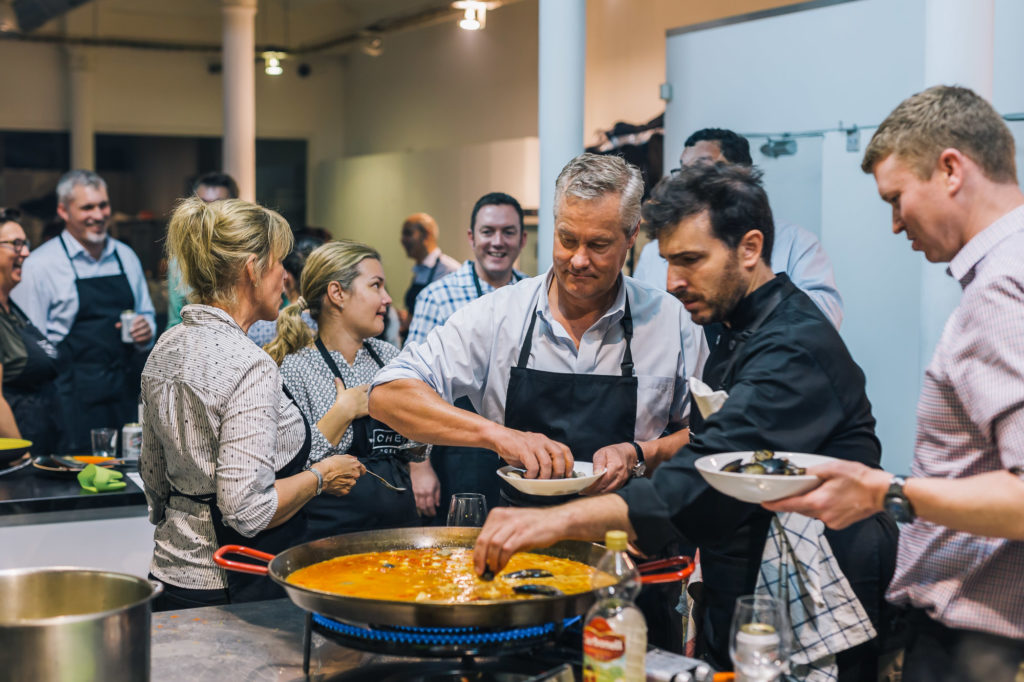
Among all culinary experiences, paella workshops consistently deliver the strongest group dynamics.
Why?
Because authentic paella requires coordination.
You simply can’t create a great paella while everyone works independently. Timing matters. Communication matters. Shared responsibility matters.
And that’s exactly what makes it such a powerful group activity.
Educational Value Beyond the Kitchen
The best cooking experiences in Barcelona are carefully designed around educational objectives.
This isn’t just:
“Let’s cook something and have lunch.”
High-quality providers integrate:
- Catalan culinary history
- Sustainability concepts
- Local food culture
- Project management principles
- Team collaboration techniques
All through the process of planning and preparing a meal together.
And let’s be honest — students are naturally more engaged when the activity ends with a delicious meal they cooked themselves.
But the real value often comes from the conversations happening while everyone waits for the sofrito to reach the perfect point.
Choosing the Right Cooking Space
Barcelona offers a huge variety of workshop environments.
Some organizers prefer:
- Professional kitchens in Eixample
- Contemporary loft spaces in Poblenou
- Boutique studios in El Born
- Rustic Catalan masías outside the city
Each setting creates a completely different atmosphere.
Industrial kitchens tend to feel energetic and professional.
Family-style spaces create warmth and intimacy.
The location becomes part of the experience itself.
Mediterranean Team Building: More Than Just a Fun Activity
Have you ever noticed how group dynamics change when people collaborate to create something tangible?
That’s why food-based team-building activities are so effective.
And no — it’s not only about having fun, although that part comes naturally.
Research shows that collaborative cooking activities improve effective communication among strangers by over 30% compared to traditional icebreaker exercises.
Why Tapas Workshops Are Ideal for Students?
Tapas-based experiences are especially popular because they encourage:
- Constant movement
- Short creative tasks
- Shared responsibility
- Fast results
- High engagement levels
Imagine six different cooking stations where teams rotate every 20 minutes:
- Homemade croquetas
- Traditional pan con tomate
- Authentic Spanish tortilla
- Catalan appetizers
- Mediterranean sauces
- Creative dessert tapas
By the end of the session, the group has created an entire shared meal together.
Every team contributes something different.
Everyone learns multiple techniques.
Nobody stays passive.
The Biggest Mistake Organizers Make
Many people assume organizing a culinary activity is as simple as:
- Booking a space
- Buying ingredients
- Showing up
That’s not enough.
What truly makes these experiences successful is skilled facilitation.
Experienced workshop leaders know:
- When to intervene
- When to step back
- How to manage group energy
- How to encourage shy participants
- How to balance competition and collaboration
Friendly Competition Works Wonders
The best student workshops include light competitive elements without creating unnecessary stress.
For example:
- “Most creative tapa”
- “Best plating”
- “Best teamwork”
The goal isn’t winning.
It’s engagement.
And because tapas formats are naturally flexible, dietary restrictions become much easier to manage.
Vegetarian?
Vegan?
Gluten-free?
No problem.
The structure adapts easily without disrupting the group experience.
Long-Term Impact Matters
Many academic coordinators report that students continue talking about these workshops for weeks afterward.
That’s the difference between entertainment and meaningful shared experience.
Educational Cooking Activities in Spain: Why Barcelona Leads the Trend?
Spain has become one of Europe’s leading destinations for educational culinary experiences aimed at international students.
And Barcelona sits right at the center of that movement.
Why?
Because no other Spanish city combines:
- Mediterranean lifestyle
- Culinary innovation
- Cultural diversity
- Educational infrastructure
- International accessibility
quite like Barcelona does.
How Barcelona Compares to Other Cities?
Different Spanish cities specialize in different culinary identities:
- Madrid focuses on fine dining and hospitality management
- Valencia centers around rice traditions and local produce
- Seville blends Andalusian cuisine with flamenco culture
Barcelona offers something broader.
Students can learn centuries-old Catalan techniques in the morning and explore molecular gastronomy in the afternoon — often within walking distance.
Educational Institutions Are Embracing Culinary Learning
Universities and business schools increasingly recognize the educational value of gastronomy-based activities.
Some programs now include:
- Culinary immersion modules
- Market visits
- Food sustainability workshops
- Restaurant collaborations
- Academic credit opportunities
The results speak for themselves.
Studies show that over 70% of international students participating in educational culinary experiences in Spain describe them as “transformational.”
And honestly, that doesn’t feel exaggerated.
Spain Understands Something Important
One thing Spain does exceptionally well is blending education with enjoyment.
There’s no rigid separation between:
- Learning time
- Social time
- Cultural immersion
The best educational experiences combine all three naturally.
Strategic Planning: The Details That Make or Break the Experience
You’ve probably seen student events fail because of avoidable logistical mistakes.
And organizing for students is very different from planning corporate events.
Student groups come with unique challenges:
- Limited budgets
- Complex schedules
- Varying participation levels
- High expectations for authenticity
Timing Is Critical
Peak demand periods include:
- September to November
- February to April
These align with international exchange programs and academic semesters.
Booking less than six weeks in advance dramatically reduces your options — especially for groups larger than 20 participants.
Ideal Group Sizes
For culinary activities, the sweet spot is usually:
- 12 to 25 students
Smaller groups may feel awkwardly intimate.
Larger groups risk losing personalization and engagement.
Barcelona’s Event Calendar Matters
The city’s busy festival calendar affects pricing and availability.
Periods requiring extra planning include:
- Sant Jordi
- La Mercè
- Christmas season
- Easter Week
Dietary Requirements Are Essential
In 2026, accommodating dietary restrictions is no longer optional.
Any serious provider should easily handle:
- Vegetarian diets
- Vegan menus
- Gluten-free needs
- Allergy management
Preparation Improves Everything
The best organizers send detailed pre-event questionnaires covering:
- Dietary restrictions
- Cooking experience
- Group goals
- Expectations
This allows for meaningful customization instead of generic programming.
And always have a backup plan.
Barcelona weather can surprise you.
Groups may arrive with unexpected dynamics.
Venues occasionally face technical issues.
Experienced providers prepare for all of it.
Unique Venues: When the Location Becomes Part of the Experience?
Barcelona offers culinary spaces far beyond standard kitchens.
And the venue itself often becomes one of the most memorable parts of the activity.
Historic Markets
Spaces near Mercat de Sant Antoni allow students to:
- Explore local ingredients
- Meet vendors
- Experience authentic Catalan food culture
before stepping into professional kitchens nearby.
Rooftops with Mediterranean Views
Cooking paella while overlooking:
- The Sagrada Família
- Barcelona’s skyline
- The Mediterranean Sea
creates an atmosphere students never forget.
Traditional Catalan Farmhouses
Converted masías just outside the city combine:
- Rural Catalan heritage
- Modern facilities
- Relaxed environments
- Immersive cultural experiences
Contemporary Industrial Lofts
Poblenou’s industrial spaces appeal to groups looking for:
- Modern aesthetics
- Flexible layouts
- Hybrid workshop formats
- Creative environments
Family Homes and Intimate Spaces
Some Catalan families now host small culinary groups directly in their homes.
These experiences offer authenticity commercial venues simply can’t replicate.
Students connect not only with recipes — but with real people and traditions.
Maximizing Impact: Turning Activities into Lasting Learning
What separates a fun cooking workshop from a truly transformative educational experience?
Reflection.
The best student activities include opportunities for participants to process what they’re learning both emotionally and intellectually.
Structured Reflection Matters
Some programs incorporate:
- Culinary journaling
- Group storytelling
- Visual documentation
- Collaborative presentations
Students reflect not only on recipes, but also on:
- Communication
- Cultural differences
- Leadership
- Creativity
- Personal growth
Follow-Up Sessions Multiply the Impact
The strongest programs don’t end when the kitchen closes.
Follow-up sessions weeks later allow students to:
- Revisit lessons learned
- Identify transferable skills
- Connect experiences to academic work
Connecting Culinary Experiences to Academic Goals
Different student groups can apply these experiences in surprisingly practical ways.
Business students might analyze local restaurant models.
Education students may design experiential learning projects.
Communication students can build marketing campaigns around local products.
The possibilities are endless.
Partnerships with Local Institutions Add Depth
The best providers collaborate with:
- Traditional markets
- Local farmers
- Wine producers
- Catalan food cooperatives
- Cultural organizations
This transforms cooking activities into full cultural immersion experiences.
Because ultimately, the best student group activities in Barcelona don’t end when participants clean their stations.
They continue influencing perspectives, relationships, and personal development long afterward.
And that’s what makes them truly unforgettable.
Barcelona is ready.The ingredients are fresh.
The kitchens are waiting.
And the possibilities are endless.