Did you know that 78% of teams participating in culinary competitions improve their internal communication within the following six months?
Barcelona isn’t just the capital of modernist architecture anymore. It has also become the epicenter of a corporate culinary revolution that is completely redefining traditional team building.
Tapas competitions are no longer limited to bars and terraces.
Today, they’re the secret weapon companies use when they want something more meaningful than PowerPoint presentations and awkward trust exercises. Because honestly — how many corporate team-building events have you attended and walked away feeling like you wasted an entire afternoon?
In Barcelona, things are different.
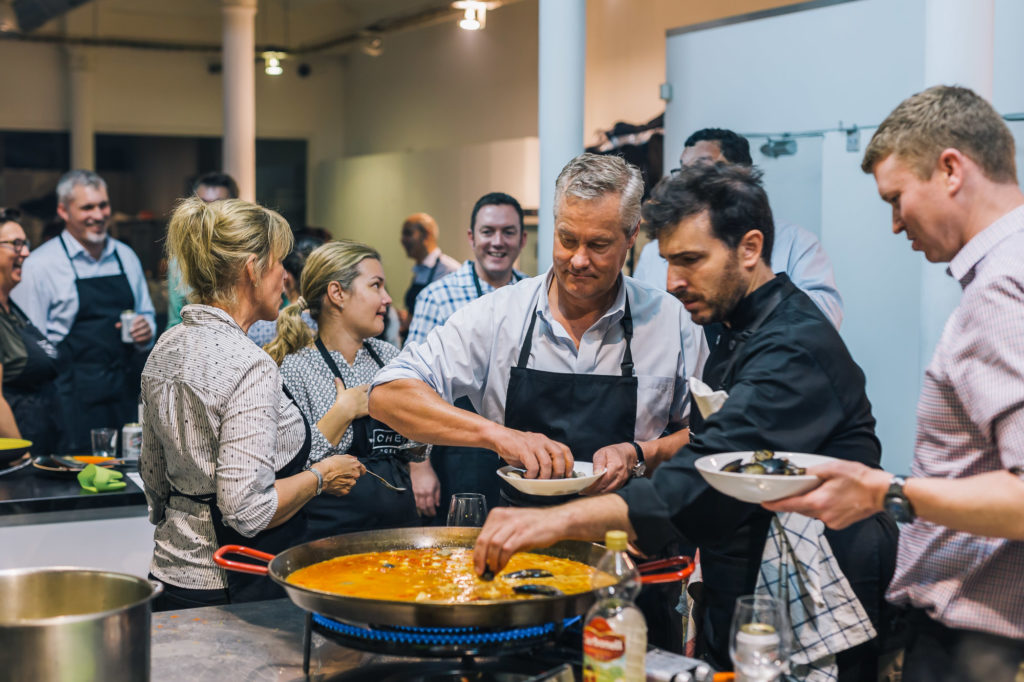
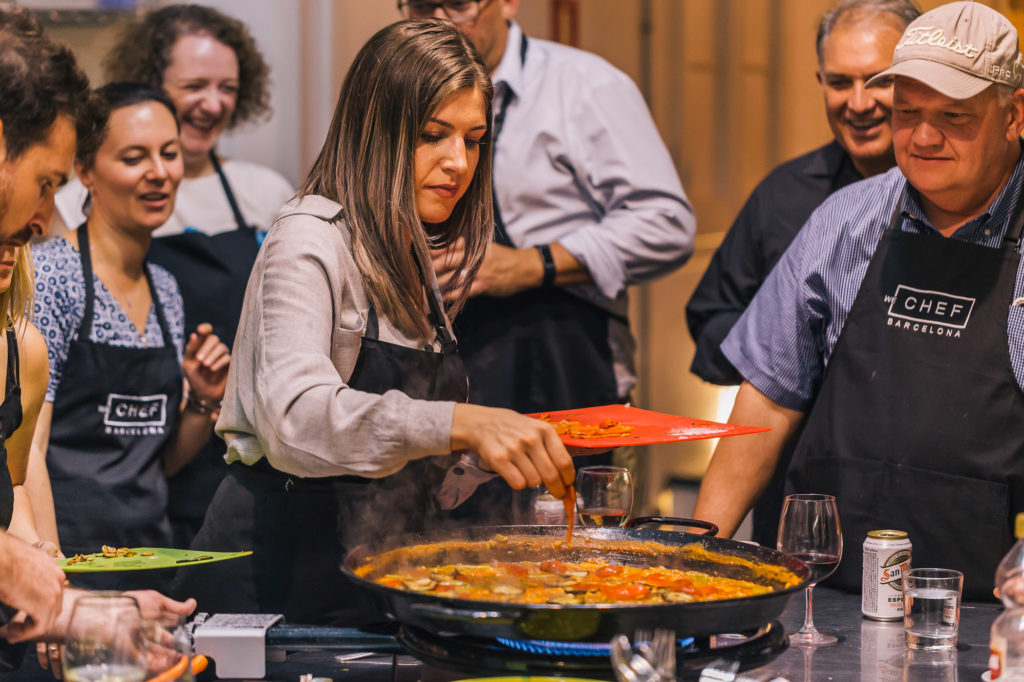
We’re talking about immersive cooking challenges where teams compete side by side wearing aprons, handling fresh local ingredients, and racing against a countdown clock that never stops ticking.
And the outcome goes far beyond perfectly cooked croquetas.
The Corporate Trend Taking Over Barcelona
Tapas competitions have grown by an astonishing 340% across Barcelona over the past three years.
And this isn’t some passing corporate trend.
Businesses have discovered something organizational psychologists have been saying for years: cooking creates genuine human connection.
Think about it.
Place a finance director and a junior marketing assistant together to prepare patatas bravas under pressure, and something unexpected happens.
Hierarchy disappears.
Egos soften.
Communication becomes natural.
Because suddenly, everyone shares the same goal:
Not embarrassing themselves in front of the rest of the team.
That’s the real magic of the format.
A professional kitchen in the heart of Barcelona, fresh market ingredients, and a respected chef acting as judge create the perfect kind of pressure — competitive, exciting, and collaborative all at once.
Unlike traditional corporate games, cooking challenges don’t feel artificial.
And companies are noticing the difference.
Why Businesses Are Embracing Culinary Team Building?
Tech startups in Barcelona’s 22@ district were among the first to adopt the trend. International consulting firms now integrate culinary competitions into onboarding programs. Even conservative financial institutions have started embracing the format.
Why?
Because the results are measurable.
Teams participating in cooking competitions report:
- Higher collaboration rates
- Better communication
- Increased employee satisfaction
- Lower staff turnover
- More successful cross-department projects
But the deeper impact goes beyond metrics.
In a world dominated by remote work and digital communication, cooking together restores something many workplaces have lost:
Real human interaction.
No screens.
No virtual meetings.
Just people solving problems together in real time.
And Barcelona provides the perfect backdrop.
The city combines world-renowned gastronomy with professional event infrastructure specifically designed for corporate experiences. That’s why companies from Madrid, Valencia, and even abroad are choosing Barcelona for culinary team-building events.
Inside the Experience: How a Professional Tapas Competition Works
Imagine your accounting department debating whether the sofrito needs more onion while the countdown clock shows five minutes remaining.
That’s exactly what happens in a well-designed tapas competition.
The Standard Format
Most events divide participants into teams of four to six people.
Each group receives:
- Identical ingredient baskets
- Professional kitchen stations
- A selection of traditional Catalan tapas recipes
Typically including classics such as:
- Pan con tomate
- Jamón croquetas
- Escalivada
Sounds easy?
Wait until you see your IT colleague trying to peel roasted eggplants under pressure.
How Teams Are Evaluated?
Professional chefs judge participants on three key criteria:
- Flavor
- Presentation
- Teamwork
Yes — teamwork is part of the scoring.
A technically perfect dish created through chaos and shouting won’t impress the judges nearly as much as calm collaboration under pressure.
The Competition Timeline
The structure is surprisingly precise:
- 15 minutes for strategy and planning
- 90 minutes of cooking
- 30 minutes for plating, presentation, and judging
But the real brilliance lies in the surprise elements.
The Mystery Ingredient Challenge
Halfway through the competition, teams receive a “mystery box” ingredient they must incorporate into their dishes.
It could be:
- Morcilla
- Padrón peppers
- Local seafood
- Even chocolate
This twist forces teams to adapt quickly and think creatively under pressure.
And that’s where leadership naturally emerges.
Someone starts organizing.
Someone manages timing.
Focuses on presentation.
Someone mediates conflict.
No forced exercises.
No fake icebreakers.
Just authentic teamwork.
Professional Kitchens Add Real Energy
Barcelona’s culinary event venues are specifically designed for these experiences.
Open kitchen layouts allow teams to see each other’s progress — and feel the pressure of competition in real time.
The atmosphere becomes electric.
And then comes the final tasting.
Every team presents their creations to the judges while the entire room watches.
The tension is real.
Why Barcelona Is the Perfect City for Culinary Team Building?
Barcelona offers something few destinations can match:
Authentic gastronomy combined with world-class corporate event infrastructure.
This city doesn’t imitate culinary trends.
It creates them.
Fresh Local Ingredients Matter
Markets like:
- La Boqueria
- Santa Caterina
- Sant Antoni
provide access to exceptional local produce.
Many corporate groups even visit these markets before the competition begins, meeting vendors and discovering the origins of the ingredients they’ll use later in the kitchen.
That connection to local culture transforms the experience from entertainment into something memorable.
Professional Cooking Spaces Designed for Events
Barcelona’s cooking schools and culinary venues have adapted their facilities specifically for corporate groups.
Neighborhoods like Eixample and Gràcia now host event kitchens featuring:
- Professional equipment
- Climate-controlled spaces
- Relaxation areas
- Private changing rooms
- High-speed Wi-Fi
- Open social layouts
Perfect for both collaboration and those inevitable corporate Instagram photos.
Catalan Cuisine Is Ideal for Team Challenges
Traditional tapas require a surprising variety of techniques:
- Frying
- Roasting
- Emulsions
- Precision seasoning
- Timing coordination
Even something as seemingly simple as pan con tomate becomes a challenge when quality matters.
One tiny mistake with salt or tomato ripeness can completely change the result.
Barcelona’s Social Food Culture Enhances the Experience
Catalonia’s famous vermouth and tapas culture naturally supports social interaction.
Participants don’t just cook.
They learn to enjoy the process, appreciate craftsmanship, and understand that great results often come from patience and collaboration.
Expert Judges Add Credibility
Many Barcelona chefs involved in these events have backgrounds in:
- Michelin-starred restaurants
- Culinary television programs
- International gastronomy competitions
Their feedback turns the event into something far more valuable than casual entertainment.
Mediterranean Weather Makes Everything Better
Barcelona’s climate allows many events to happen outdoors for much of the year.
Imagine competing on:
- Rooftop terraces
- Modernist courtyards
- Urban gardens
- Spaces overlooking the Mediterranean
That atmosphere matters.
The Psychology Behind Why Cooking Competitions Actually Work
Why does cooking together build stronger bonds than traditional team-building exercises?
Neuroscience offers fascinating answers.
Cooking activates multiple brain systems simultaneously:
- Creativity
- Decision-making
- Coordination
- Memory
- Problem-solving under pressure
Professional Masks Disappear in the Kitchen
It’s impossible to maintain a rigid corporate persona while covered in flour and trying not to burn croquetas.
That shared vulnerability creates authentic connection.
Time Pressure Reveals Real Dynamics
The clock introduces productive tension.
Not destructive stress — but enough pressure for natural leadership and communication patterns to emerge.
Within 90 minutes, teams often move through every stage of group development:
- Orientation
- Conflict
- Adaptation
- High performance
Mistakes Become Immediate Learning Opportunities
Burned the sofrito?
No PowerPoint presentation can save you.
Teams must improvise, redistribute tasks, and stay emotionally balanced.
Exactly the same skills required in real business environments.
The Reward Is Tangible
At the end of the event, participants have created something real.
Something they can:
- Taste
- Photograph
- Share
- Remember emotionally
That sensory connection makes the experience unforgettable.
Hidden Talents Surface Naturally
The quiet software developer suddenly becomes the best organizer.
The demanding manager reveals exceptional mediation skills.
These discoveries often reshape workplace dynamics long after the event ends.
Real Success Stories: When Tapas Competitions Change Companies
A Barcelona-based tech consultancy organized its first tapas competition in March 2023.
Six months later, interdepartmental collaboration had increased by 60%.
Coincidence?
Maybe.
But employee feedback suggested otherwise.
One executive explained:
“We discovered that our HR manager had an incredible sense of humor and that one of our developers became a natural leader under pressure. Those discoveries changed the dynamic of our meetings completely.”
Another striking example came from a multinational pharmaceutical company near Sant Cugat.
Their research and marketing departments barely communicated before the event.
After competing together to prepare cod croquetas under the guidance of a Gothic Quarter chef, collaboration between departments increased dramatically.
Why It Works So Well?
The pressure of the competition mirrors real business conditions:
- Limited resources
- Tight deadlines
- Communication challenges
- Constant adaptation
But without the negative consequences of actual workplace failure.
The Long-Term Impact
One digital marketing startup ran quarterly cooking competitions throughout 2024.
The results?
- Staff turnover dropped to 12%
- Employee satisfaction reached record highs
- Other companies in the sector began copying the format
Even traditional financial institutions saw measurable improvements in:
- Creative problem-solving
- Client communication
- Team resilience
Participants consistently describe the same feeling afterward:
“I finally got to know my coworkers properly.”
That’s not empty corporate language.
It’s genuine human connection.
Why Your Company Should Try This Next?
The reality is simple:
Tapas competitions in Barcelona work.
They improve communication, collaboration, leadership, and workplace culture in ways traditional team-building activities rarely achieve.
Professional experiences like the WeChef Barcelona tapas competition combine:
- Fully equipped kitchens
- Experienced chefs
- Structured methodologies
- Scalable event formats
Whether your company has:
- 20 employees
- 200 participants
- Hybrid teams
- International staff
…the format adapts easily.
And the return on investment can be enormous.
One successful collaborative project resulting from stronger internal communication may justify the entire cost of the event.
But the benefits go even further:
- Better talent retention
- Stronger company culture
- Higher employee engagement
- More authentic workplace relationships
Barcelona Is Ready
Its markets.
Chefs.
Its culinary traditions.
Everything is already in place.
The only real question is:
When will your company take the first step toward a more human, creative, and connected workplace culture?
Because in today’s business world, companies that innovate in how they build teams are the ones attracting — and keeping — the best talent.
Modern professionals want more than salaries.
They want experiences.
Growth.
Real connection.
And sometimes, all of that begins with a plate of tapas.